The path of Ulysses.

Nine murals along via Lebina, in Sperlonga, tell the Odyssey on the white walls of the village. It is not a museum: it is an alley you walk, one scene at a time.

9 scenes along the alley Sperlonga, Lazio

“Sing to me, O… Sperlonga.” That is one way to paraphrase the project that brought to the historic via Lebina a path of images and murals devoted to the deeds of Ulysses and to the turning points of the Odyssey. It came to life in October 2023, from an idea of the president of the Sperlonga Turismo consortium, Leone Armando La Rocca.

The murals are woven into the alleys of the village and build a genuine route. The project brought Sperlonga Turismo together with the Comune di Sperlonga and the Archaeological Museum, with its director Cristiana Ruggini; the murals are by the artist Marco Longo (ROBOF Studio), the information panels by Franca Del Vecchio (Interni a Mano), with raised decoration drawn from classical ornament.

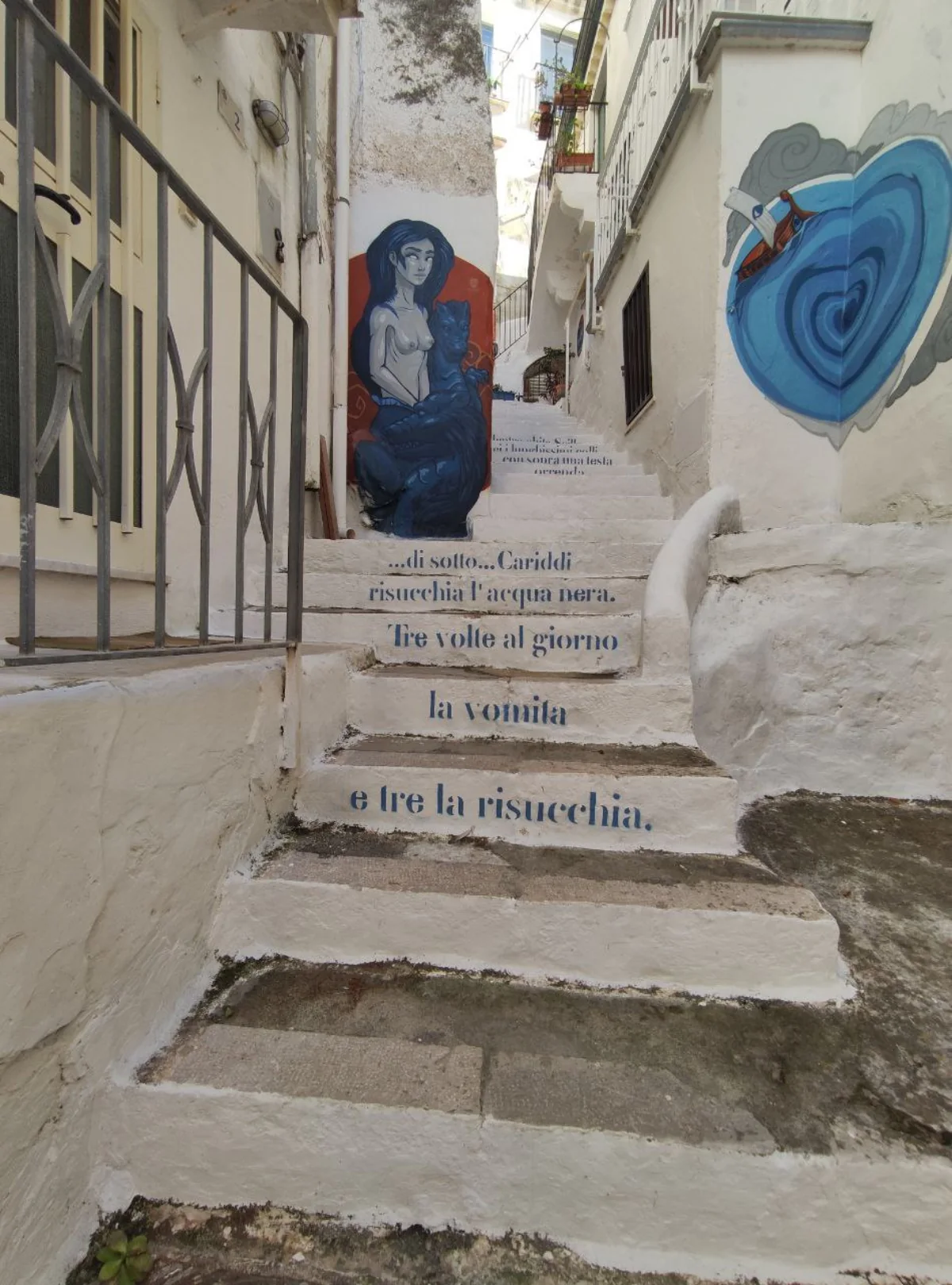
There is one more surprise for whoever turns into via Lebina: the risers of the steps carry famous lines from the Odyssey — an attraction inside the attraction, in one of the village’s most iconic alleys.

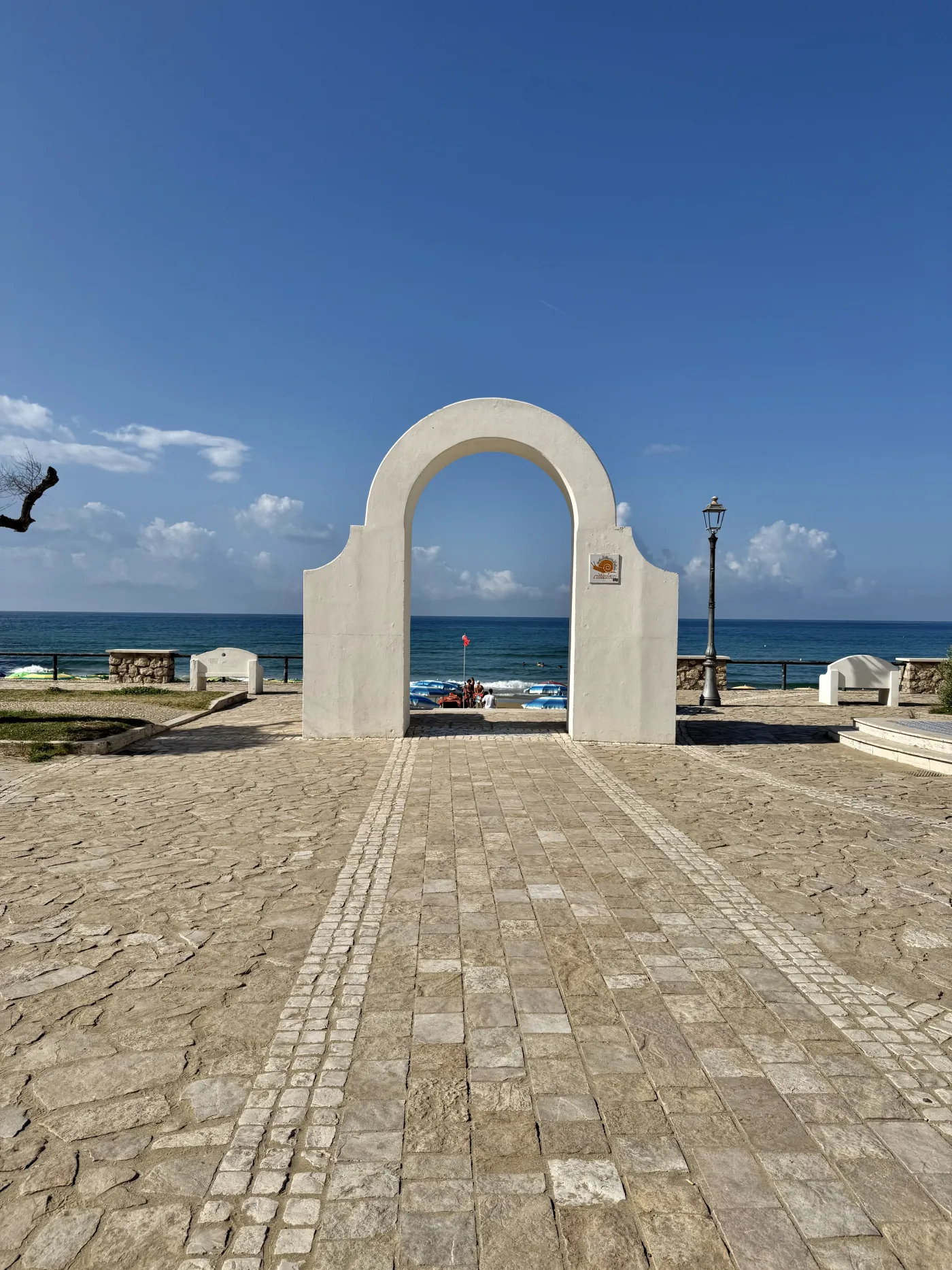
The white arch on the Sperlonga seafront, looking out to the sea and the beach

Sperlonga

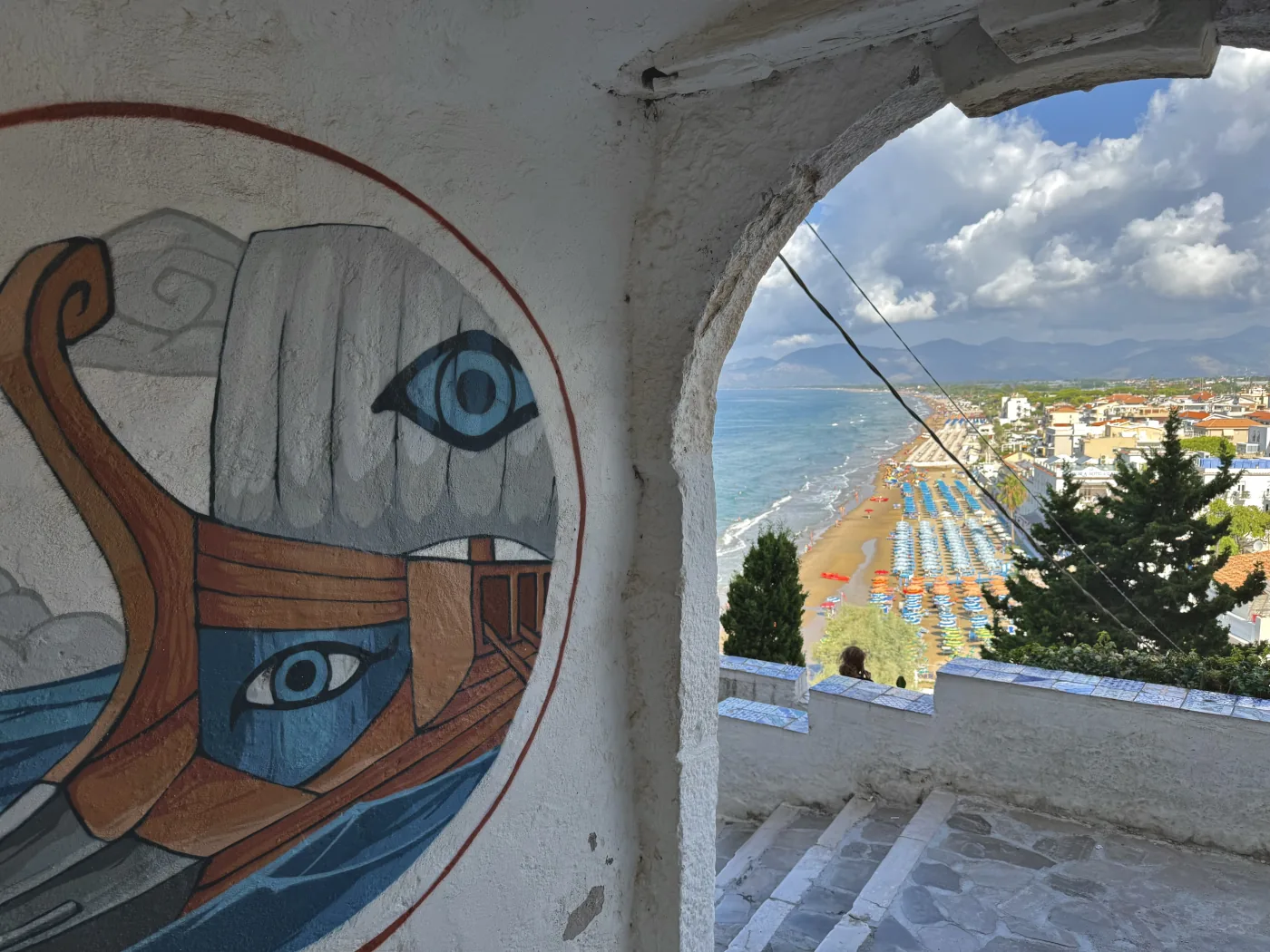
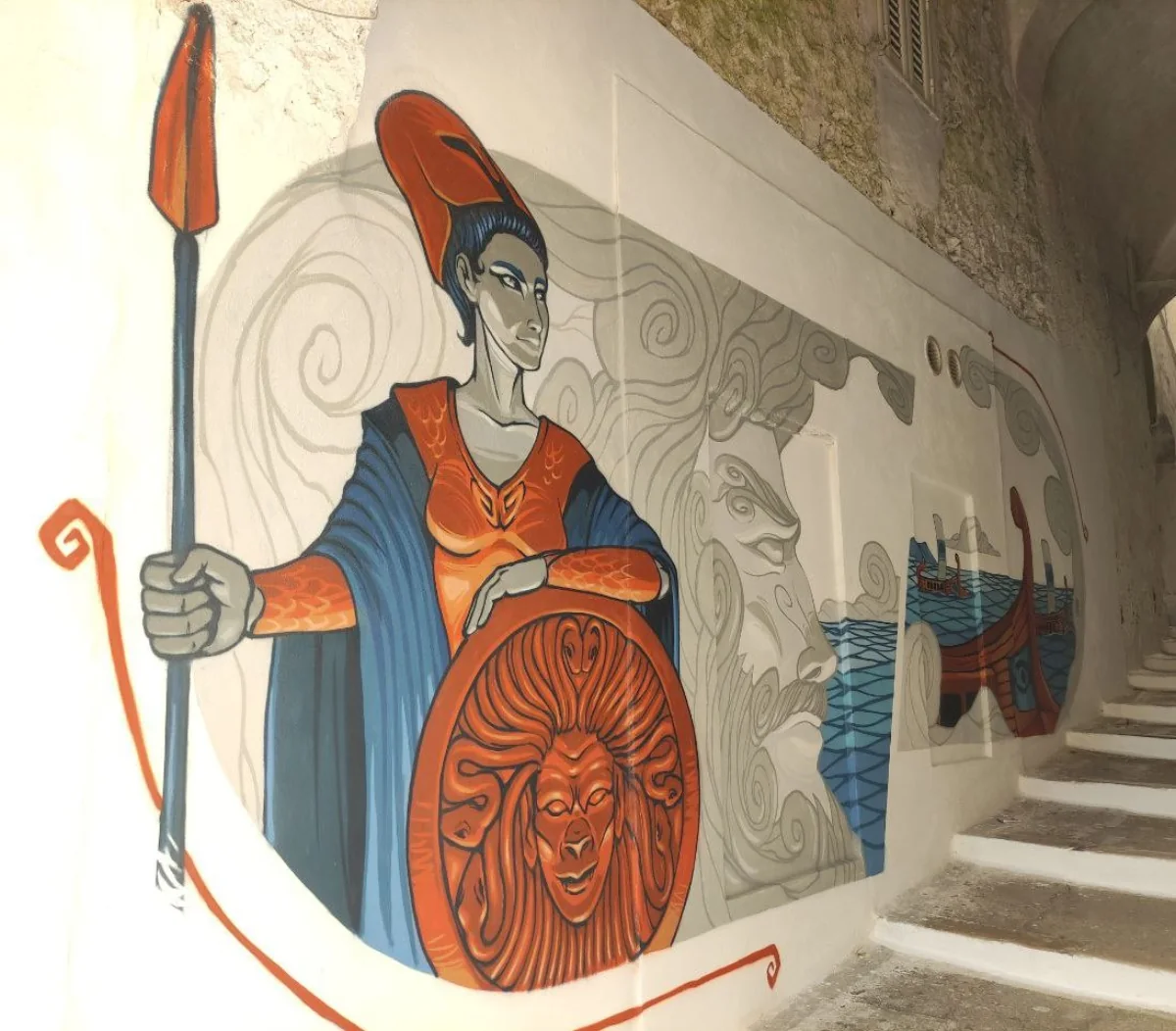
The mural of Athena and the ship of Telemachus, painted on the wall beneath the arch before via Lebina

Athena and the departure of Telemachus

The only son of Ulysses, Telemachus plays a leading part in the Odyssey. His father’s absence pushes him to set out in search of news of him. Helping him is Athena, in the guise of “Mentor”, who guides him to Pylos, Sparta and then back to Ithaca.

On the walls beneath the arch that leads towards the old town, just before via Lebina, Athena is painted together with the boat on which Telemachus will depart.

Read more on Treccani
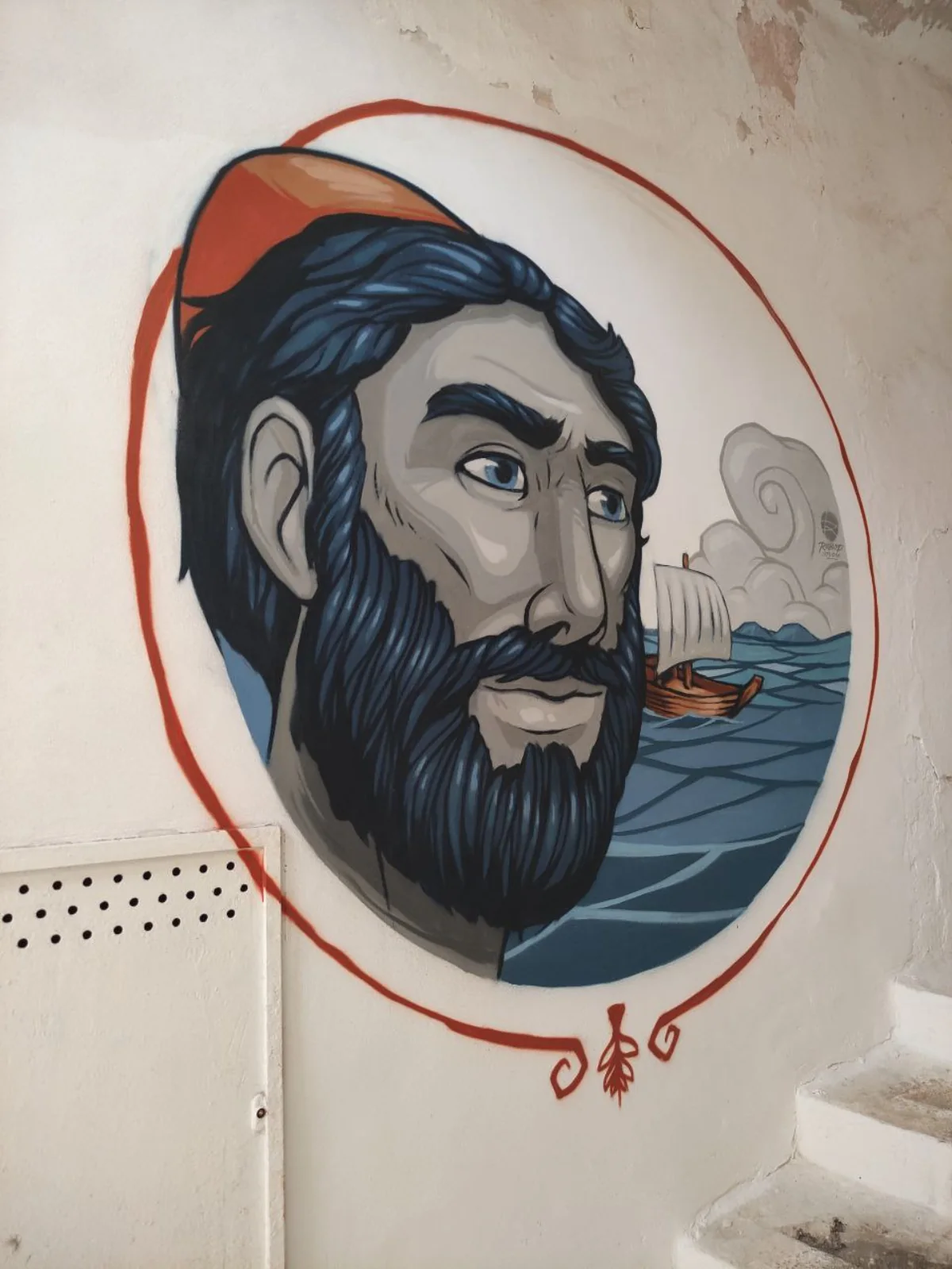
The mural of Ulysses in the foreground with his cap, and behind him the raft with a makeshift sail

Ulysses and the raft

The Odyssey describes the building of the raft in such detail that it almost reads like a technical manual. Many scholars speak of a real vessel: Ulysses’ trials at sea remain a deep piece of symbolism.

On the first stretch of via Lebina Ulysses is in the foreground with his characteristic cap, while to his left the raft can be glimpsed at sea with its makeshift sail.

Read more on Treccani
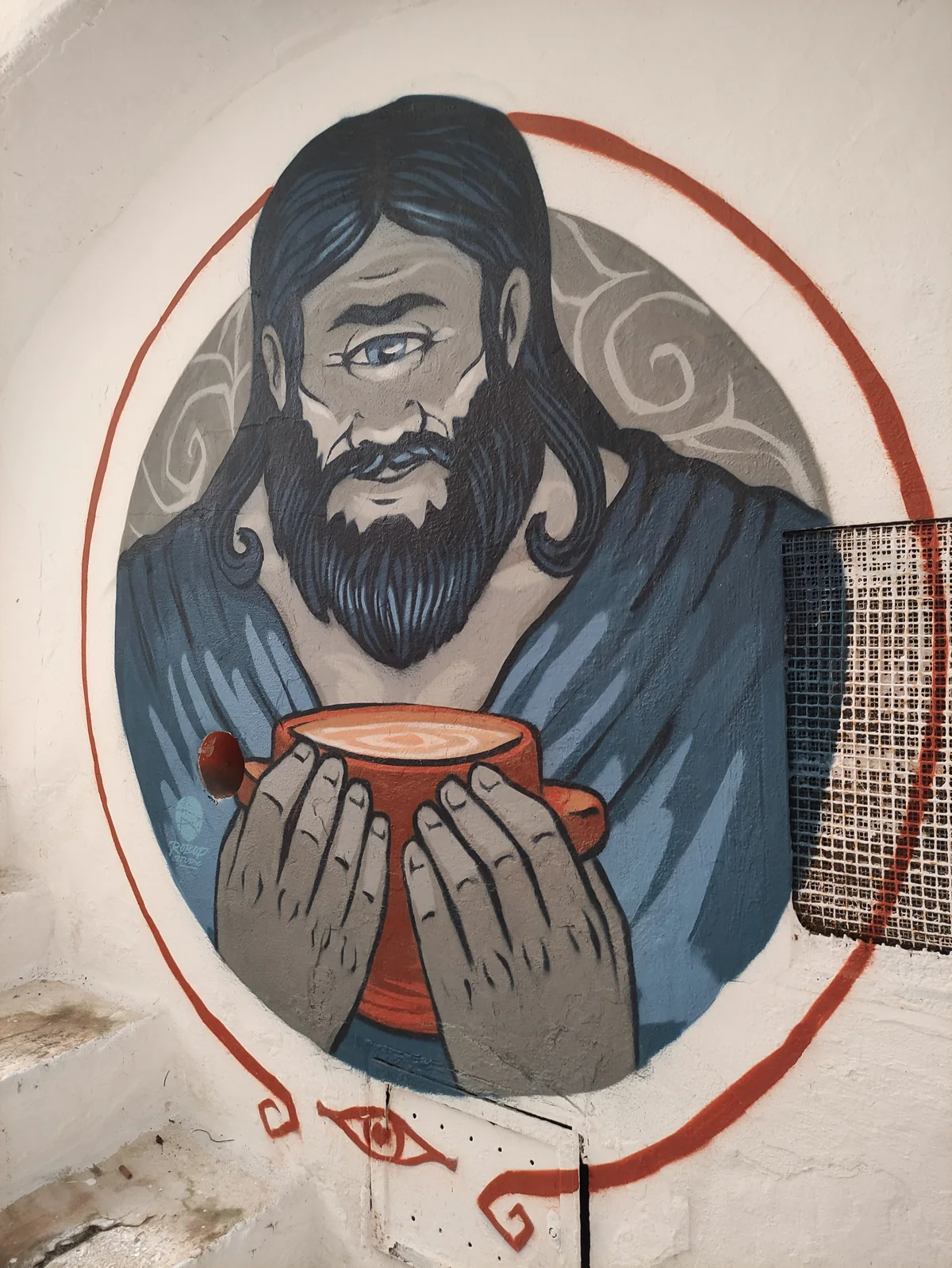
The mural of Polyphemus, the one-eyed cyclops, shown drinking from the cup offered by Ulysses

Polyphemus

“A coarse and brutish one-eyed shepherd”: that is how the ninth book of the Odyssey describes one of the most widely pictured figures in the collective imagination. Fittingly, one of the most famous depictions is the marble group found in the Villa of Tiberius, now in Sperlonga’s archaeological museum.

In the via Lebina mural Polyphemus is shown drinking the doctored wine offered by Ulysses, who had given his name as “Nobody”.

Read more on Treccani
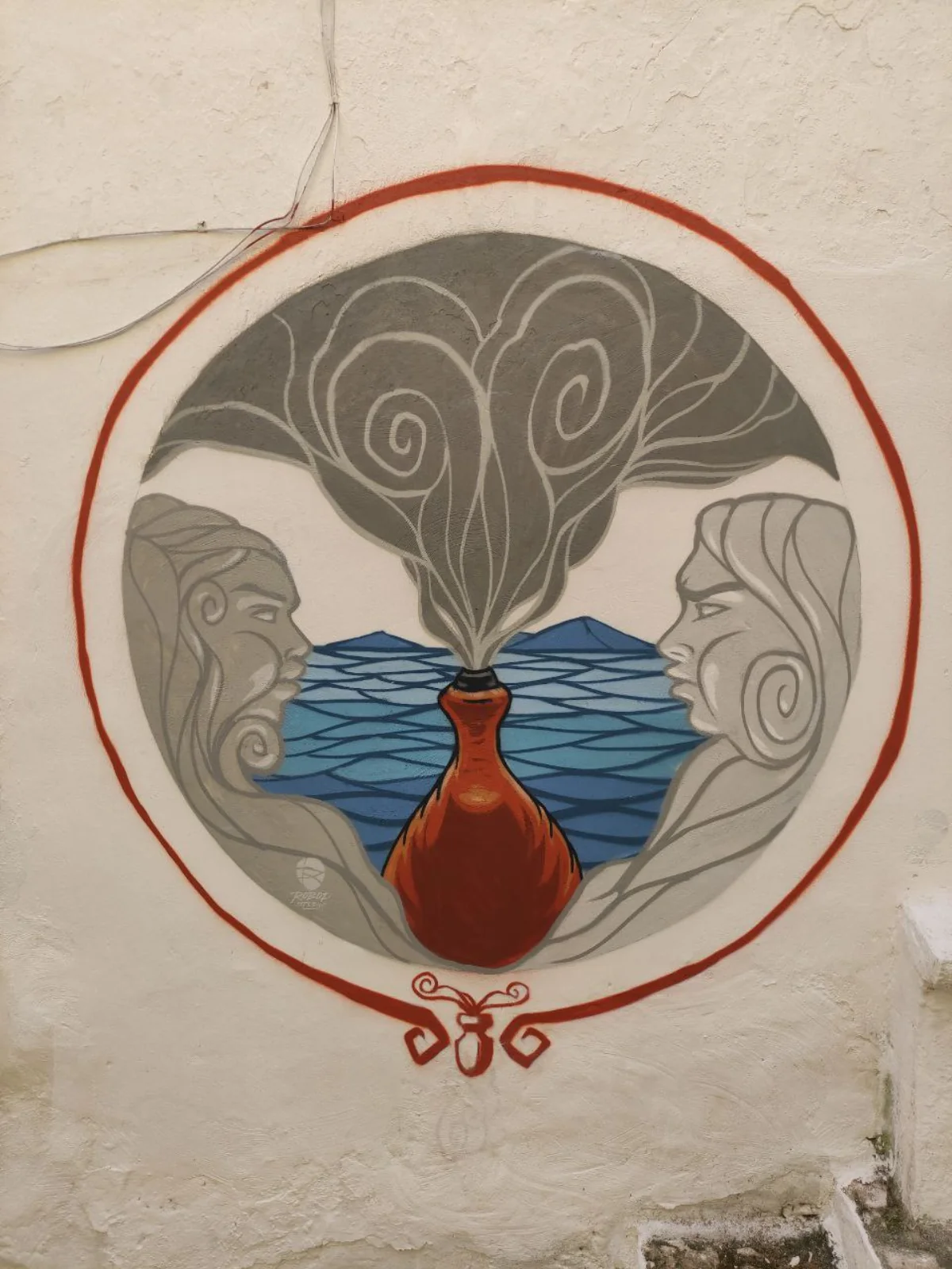
The mural of Aeolus, king of the winds, shown with the jar that holds the unfavourable winds

Aeolus

Aeolus is the king and keeper of the winds, another central figure in the trials Ulysses suffers on his way to Ithaca. In the famous episode he gives Ulysses a jar holding the winds unfavourable to sailing: his companions, who do not know what is inside, make the mistake of opening it just as long-desired Ithaca appears on the horizon.

Read more on Treccani
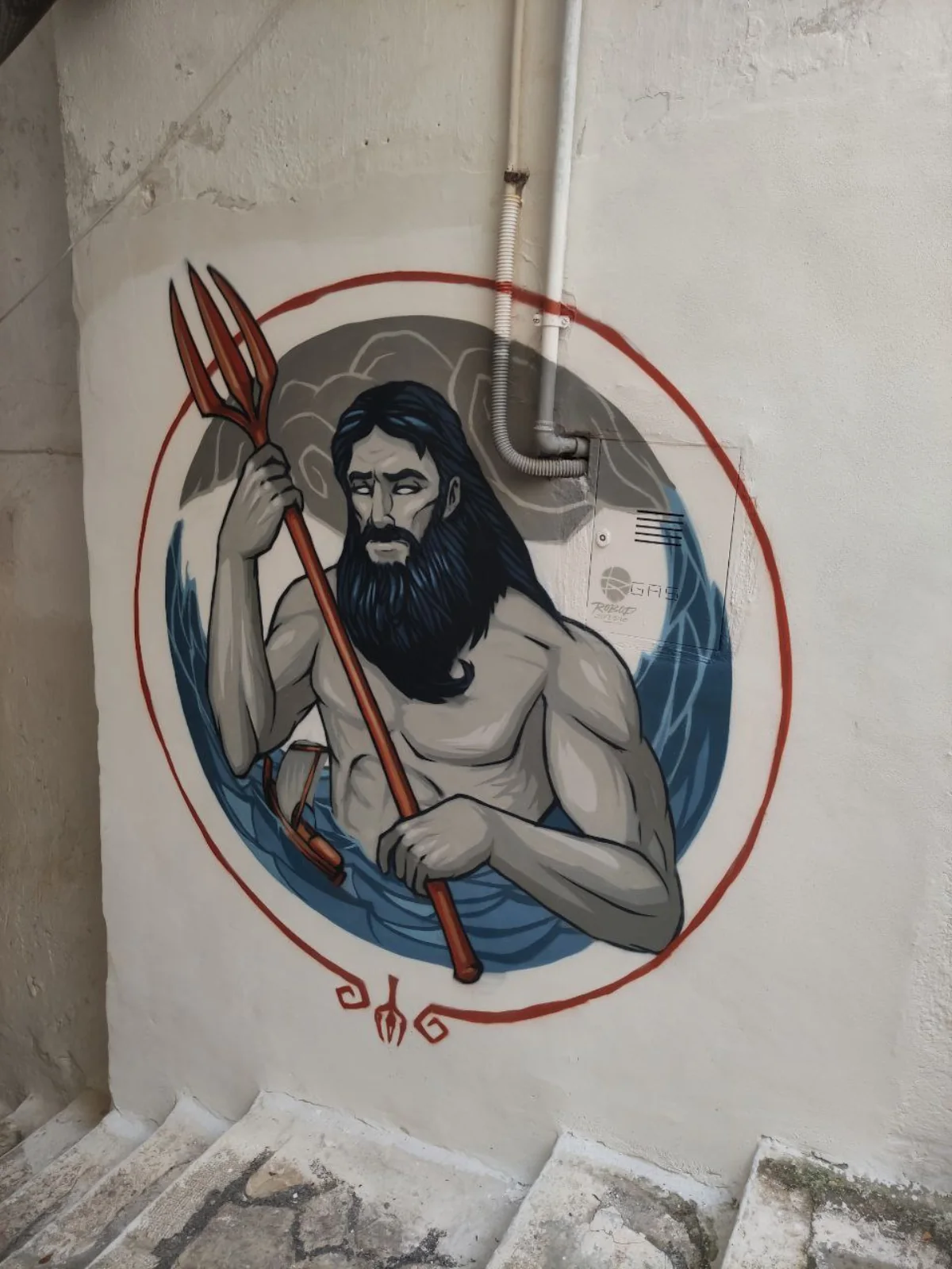
The mural of Poseidon gripping his trident, with a stormy sea and dark clouds behind him

Poseidon

A god of the ancient Greeks, the Odyssey describes his wrath at Ulysses’ outrage against his son Polyphemus. For scholars that wrath stands for “the divine persecutor who causes the trials and misfortunes of the human hero”.

On the walls of via Lebina he is shown gripping his trident, with which “he shakes the earth and makes its springs gush”. Behind him a heavy sea rages beneath dark clouds.

Read more on Treccani
The murals of Scylla and Charybdis, painted facing each other on the two sides of the alley

Scylla and Charybdis

They are the monsters of the Strait of Messina: the beings that devour men or suck ships down to ruinous wreck. Thanks to Circe’s warnings Ulysses passes unharmed between the two, and survives the perilous song of the Sirens as well.

Here Scylla and Charybdis face each other menacingly: a visitor climbing from the lower end sees them on either side.

Read more on Treccani
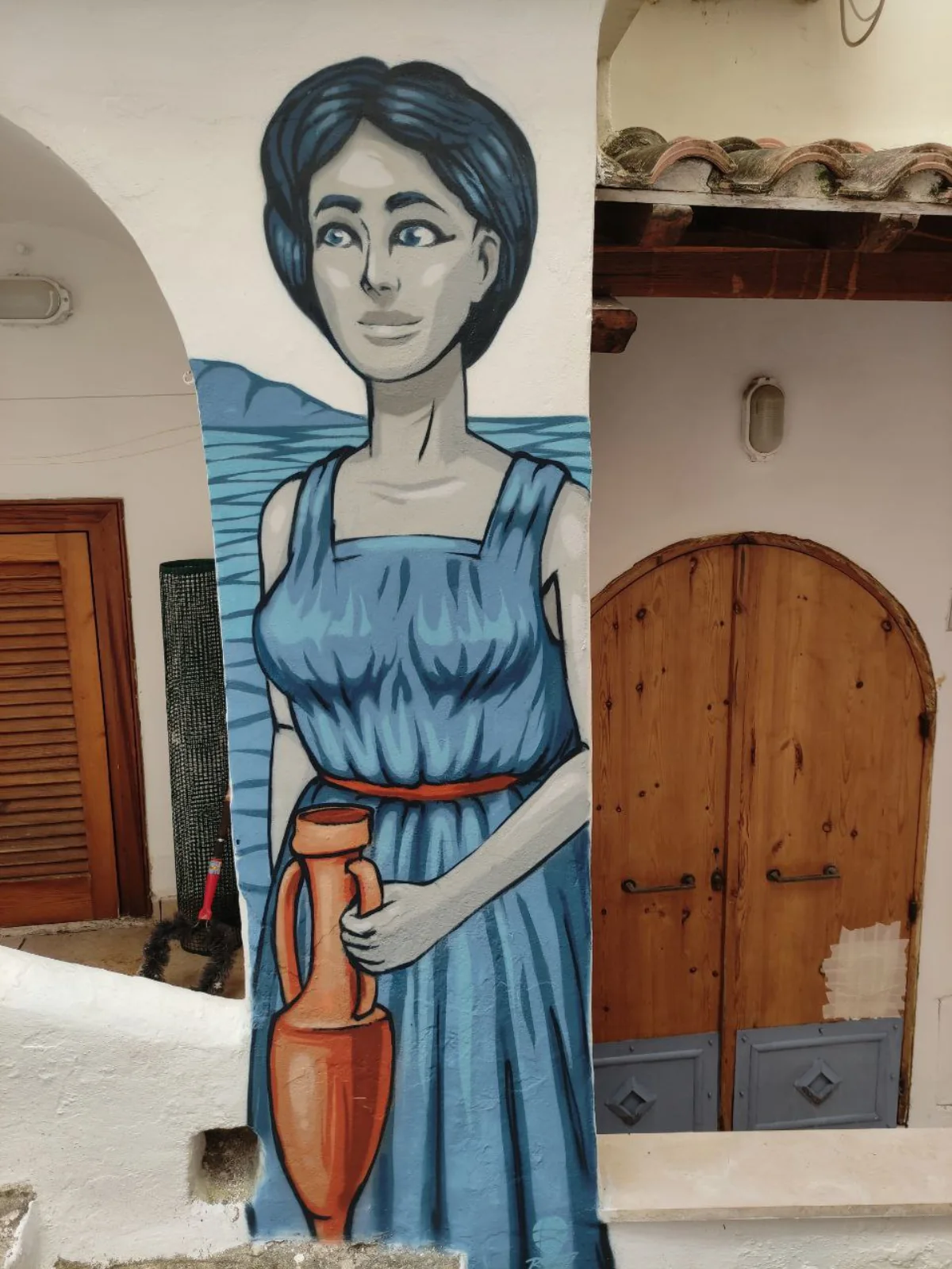
The mural of Nausicaa in a blue dress holding a clay water jar, against the sea

Nausicaa

Beautiful, young and carefree, Nausicaa is described in the Odyssey as a girl on the threshold of adulthood. It is she who helps Ulysses, providing the vessel that will let him return to Ithaca.

In via Lebina she is painted with a clay vessel for carrying water and a blue dress, like the blue sea behind her, where glimpses of the island’s headland can be seen.

Read more on Treccani
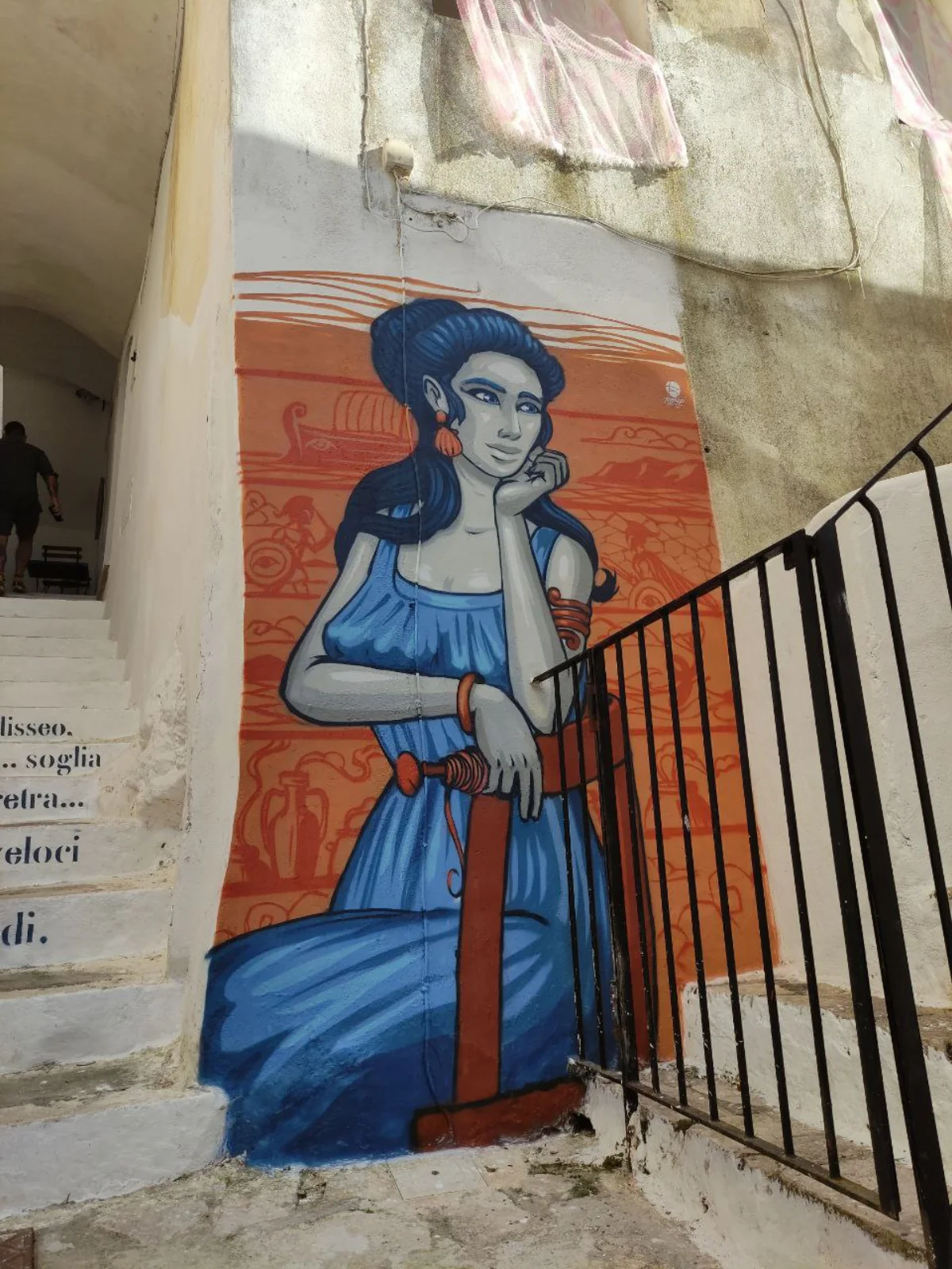
The mural of Penelope with her face resting on her palm, looking out at the horizon

Penelope

The emblem of faithfulness, a symbol of home and of the return to family, to the point that scholars have almost catalogued her as the female equivalent of Odysseus. In Homer’s lines she is forever weaving by day and unpicking by night the shroud of her father-in-law Laertes, to delay choosing a new husband.

In via Lebina she is portrayed with her face resting on her palm, scanning the horizon in hope.

Read more on Treccani
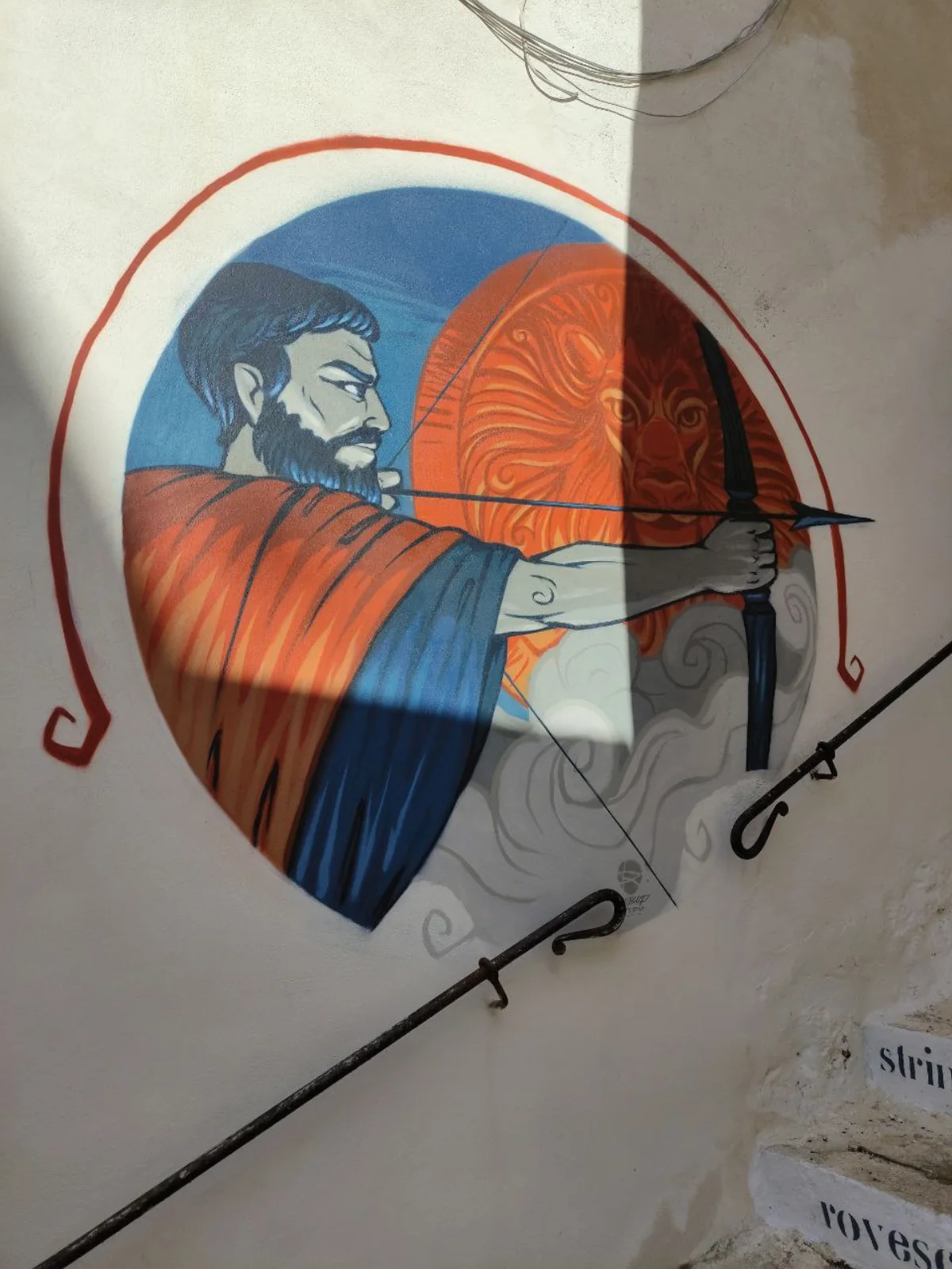
The mural of Ulysses drawing the bow, painted beneath the last arch of via Lebina

Ulysses and the bow

It is one of the closing scenes of the return to Ithaca. The contest of the bow, which none of Penelope’s suitors can string, is one more trial for Odysseus: a bow only he will be able to draw, and one he enters the contest for only with Penelope’s own help.

Here the figure of Ulysses with the bow sits beneath the last arch, the one that brings the visitor to the foot of the steps of the former church, today the municipal auditorium.

Read more on Treccani
A mural of a ship’s prow with a painted eye, under an arch looking out to the sea and the beach

The village, from above.

Coda

The same headland the trail runs across, filmed from the drone and from the ground: ninety seconds between the lake, the tower and the Grotto of Tiberius, where the marble group of Polyphemus was found.

Watch the Sperlonga film